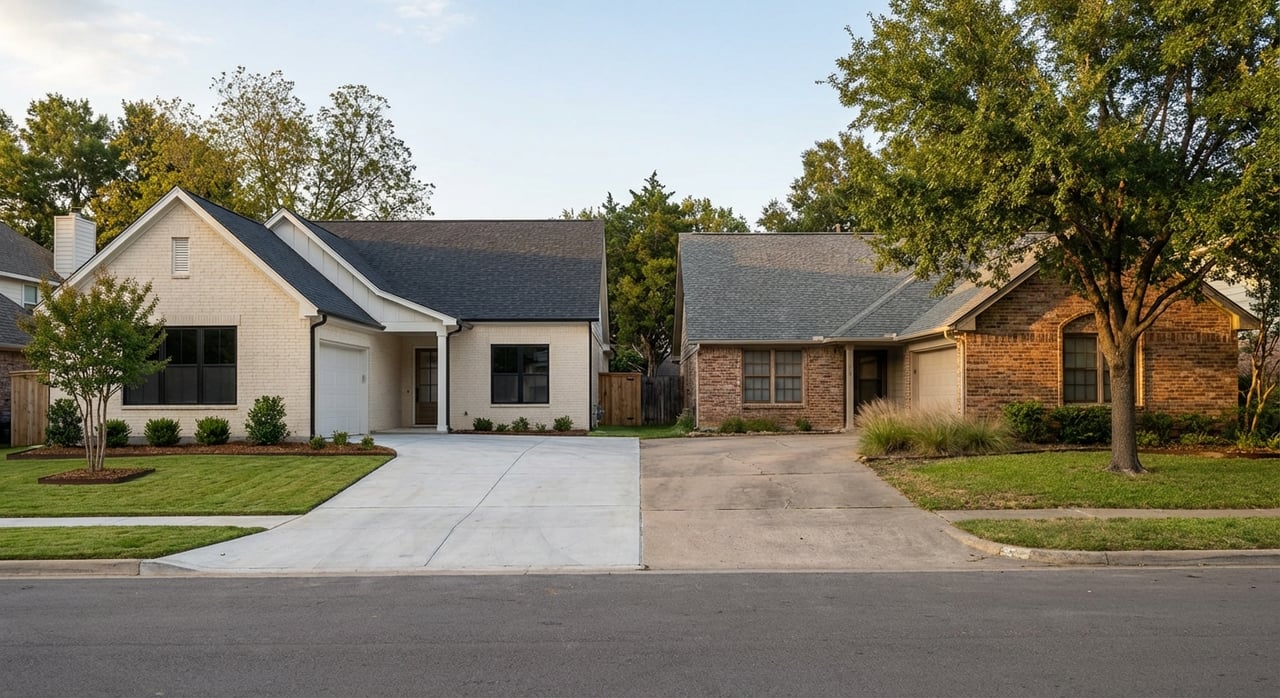
Should you build new or buy a resale in McKinney? It is a big decision, and the right answer depends on your timing, budget, and lifestyle. You want clear facts about costs, taxes, warranties, and timelines so you can move forward with confidence. This guide breaks down what matters most in McKinney right now and gives you a simple framework to choose. Let’s dive in.
Market snapshot: McKinney in 2026
As of January 31, 2026, Zillow’s index shows a typical McKinney home value around $476,790. Countywide, Redfin reports Collin County’s median sale price near $435,000 in January 2026, down about 5.4% year over year. Days on market have lengthened compared with the prior year. In plain terms, the market has cooled from the 2020 to 2022 peak.
For you, that means more selection and a bit more leverage. Builder incentives have also returned in many submarkets. If you are comparing new construction to resale, this is a good window to negotiate.
New construction vs resale at a glance
What “new” looks like in McKinney
Most new homes here sit in master planned communities with amenities. You will see product lines by lot width, often around 40, 50, and 60 feet, with some larger lots at the edges of the city. Homes come with modern floor plans, energy‑efficient systems, and fresh finishes. Expect a mandatory HOA that maintains amenities and sets community standards.
What resale offers locally
Resale homes, especially in older neighborhoods and near Historic Downtown, can offer larger lots, mature trees, and established streetscapes. Some areas may not have an HOA, which gives you more flexibility on exterior changes. You also get the benefit of a built environment that has settled over time, which helps you see how the property and neighborhood live day to day.
Cost comparison that actually holds up
Price premium today
Nationally, the long‑running premium on new homes narrowed in 2024 and 2025. In some periods, new homes sold only a few percent above existing homes, once incentives were factored in, according to Bankrate’s summary of NAHB analysis. In McKinney, the gap varies by community, lot, and included options. Always compare the total, not just the base price.
Hidden line items to budget
For new builds, plan for these extras:
- Lot premiums for corners, greenbelts, cul‑de‑sacs, or water views. These can range from low five figures to much higher, depending on the community.
- Design center upgrades that often add 15 to 25 percent or more to a base price in practice. Flooring, counters, cabinets, and lighting add up fast.
- Post‑close items like window coverings, landscaping, extended patios, and sometimes fencing or irrigation.
For resales, your leverage often shows up in price and terms. Budget for inspection findings and near‑term capital items such as roof, HVAC, and windows. Get contractor estimates during the option period so you can make an apples‑to‑apples comparison with a new home’s upgrade budget.
Taxes, assessments, and HOA
Your monthly carry in McKinney includes city, county, and school taxes, plus any MUD or PID assessments and your HOA dues. The City of McKinney tax information page explains the city portion of your bill. Use Collin Central Appraisal District guidance to verify assessed value and available exemptions.
Many newer communities use Municipal Utility Districts or Public Improvement Districts to fund infrastructure and amenities. MUDs are added ad valorem taxes. PIDs are assessments that may run until bonds are retired. The McKinney MUD FAQs explain how these charges work. HOA dues in master plans vary widely, from roughly a few hundred dollars per year to more than $1,500 where amenities are more robust. Always confirm the exact amounts for the specific property.
Timelines and contracts
How long will it take
- Resale homes usually close in 30 to 60 days, depending on lending, appraisal, and title.
- Completed spec or inventory new homes can also close in 30 to 60 days.
- Build‑to‑order homes often take 6 to 12 months, with many McKinney communities running about 8 to 11 months depending on weather, selections, and inspections. For a helpful overview of build stages and best practices, see this new construction process guide. You can also review permit steps on the City of McKinney permits portal to understand local timelines and checkpoints.
Contract differences to watch
- Appraisal language: Builder contracts often limit remedies if the appraisal comes in low. Ask exactly what happens and whether you have price reduction or termination options.
- Inspections and punch lists: Schedule independent inspections at foundation, framing, and final. Document a detailed pre‑close punch list and confirm how the builder handles post‑close items. The process guide above outlines key inspection touchpoints.
- Incentives and preferred partners: Many builders tie closing cost credits or rate buydowns to using a preferred lender and title company. Compare the net effect on your total price and monthly payment, not just the headline incentive.
Warranty and Texas HB 2024
Texas updated the residential construction statute of repose in 2023. If a builder offers a qualifying written warranty that meets minimum standards, the statute of repose for certain claims can be shortened to 6 years for single‑family and townhouse products. Without that qualifying warranty, a longer 10‑year repose can apply. You can read a clear summary in the National Law Review’s update on HB 2024.
Practically, some large DFW builders moved to a 1‑2‑6 warranty structure, while others kept 1‑2‑10 coverage as a differentiator. Ask for the full warranty document before you sign. Note the contract signing date, the closing date, and any dispute resolution language so you know exactly what protection you have.
Lifestyle tradeoffs to consider
Amenities and programming
If you value resort‑style pools, trails, parks, and planned community events, new master planned neighborhoods are built for that. You will likely have an HOA, rules, and fees, but you also get newer infrastructure and community programming.
Character and location
If you prefer mature trees, larger lots, and established streets, a resale in an older neighborhood may fit better. Homes near downtown can offer a unique sense of place and quick access to local dining and services. We can help you evaluate commute corridors and school attendance zones that matter to your household.
A step‑by‑step framework to choose confidently
Use this simple checklist to organize your decision.
- Define non‑negotiables
- Do you need to move in 30 to 60 days, or can you wait 6 to 12 months for a build?
- What lot size and backyard use do you need?
- Which attendance zones and commute routes work for you?
- Calculate total monthly carry
- Add principal and interest, taxes, MUD or PID, HOA, insurance, and utilities.
- Verify parcel‑specific taxes and assessments through Collin CAD, and confirm HOA dues and any initiation fees.
- Compare finished value and near‑term costs
- For new: start with base price, add lot premium and your priority upgrades, then include closing costs.
- For resale: price minus expected repairs and desired renovations. Get contractor estimates during your option period.
- Warranty and long‑term protection
- Request the builder’s full warranty in writing. Confirm whether it is 1‑2‑6 or 1‑2‑10 and how HB 2024 applies.
- Consider the future resale value of a home with a longer structural warranty.
- Lifestyle and amenities
- New master plans tend to offer comprehensive amenities and community programming with an HOA.
- Older areas offer character, shade, and potentially larger yards, sometimes without an HOA.
- Negotiation strategy and timing
- With more inventory on the market, many builders offer closing cost credits, rate buydowns, or design allowances. Ask for a current incentive sheet and whether incentives can be combined.
- With resale, use comparable sales and inspection findings to negotiate price and repairs.
- Due diligence checklist
- Confirm parcel tax lines, including any MUD or PID. Review HOA documents and dues.
- Get the builder’s price sheet and list of included features, plus a current incentive list.
- Schedule independent inspections for new construction. For resale, get contractor bids for major items.
- Review the contract timeline, financing terms, appraisal language, and any liquidated damages or earnest money provisions.
- Request recent utility bills if available to model total monthly costs.
Quick reference: MUD, PID, and HOA explained
- MUD: A Municipal Utility District that levies an ad valorem tax to fund infrastructure such as water and sewer. See the McKinney MUD FAQs for how assessments work.
- PID: A Public Improvement District that charges an assessment for improvements and amenities. Terms vary by district and bond schedule.
- HOA: A homeowners association that maintains amenities, enforces design standards, and collects dues. Fees and rules vary widely by community.
For taxes and assessments, start with the City of McKinney tax information and verify parcel specifics with Collin CAD.
The bottom line
Both paths can be smart in McKinney’s 2026 market. New construction gives you modern design, energy efficiency, and community amenities, with incentives that can narrow the cost gap. Resale gives you location variety, established lots, and faster closings. If you compare total monthly carry, warranty protection, and timing side by side, the right choice becomes clear.
If you want a local, hands‑on guide to run the numbers, vet contracts, and negotiate well, reach out to The Mendez Group. We will help you choose the path that fits your timeline and budget. Hablamos español.
FAQs
Are new homes more expensive than resales in McKinney in 2026?
- The price gap has narrowed nationally to only a few percent in some periods, and local builder incentives can further reduce your net cost, so compare total out‑the‑door numbers.
How long does a new build take in McKinney?
- Build‑to‑order timelines commonly range from 6 to 12 months, with many local communities running about 8 to 11 months depending on weather, selections, and inspections.
What is a MUD or PID and how do they affect my payment?
- MUDs add an ad valorem tax and PIDs add assessments, both of which increase your total monthly carry alongside city, county, and school taxes and any HOA dues.
Can I negotiate with builders in McKinney?
- Yes, many offer closing cost credits, design allowances, lot premium reductions, or interest rate buydowns, and terms often improve for inventory homes or near quarter‑end.
What warranty do Texas builders provide on new homes?
- Many now offer a 1‑2‑6 structure that can shorten the statute of repose to 6 years under HB 2024, while others still provide 1‑2‑10; always get the exact warranty in writing before you sign.